
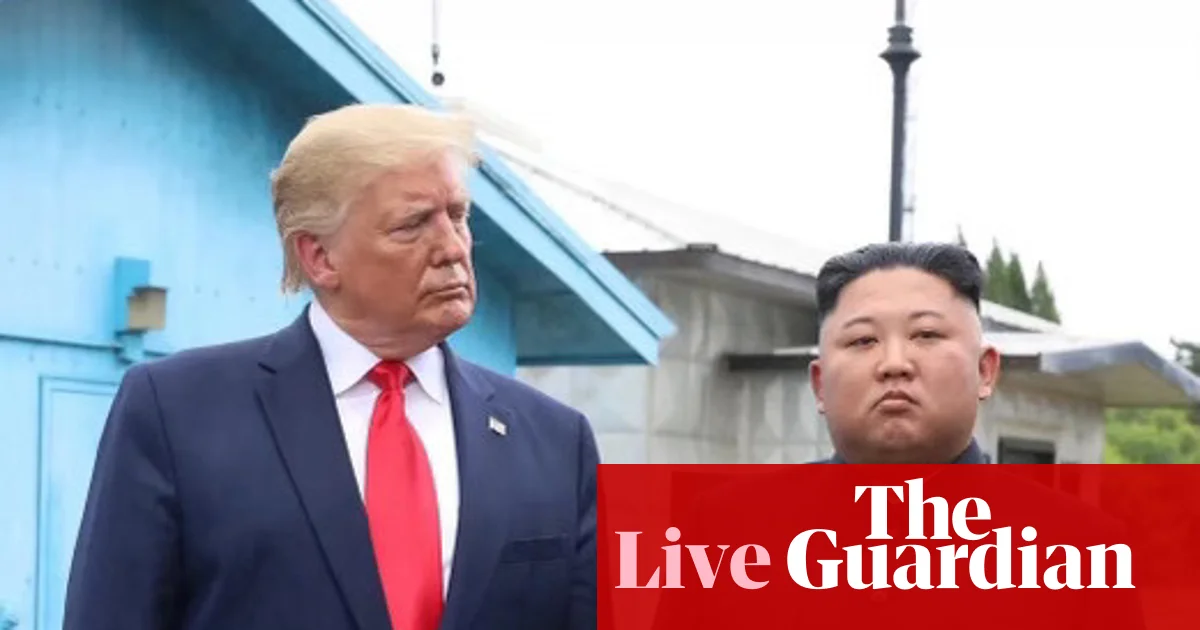
President Donald Trump has ordered the Pentagon to substantially reduce planned military exercises with South Korea, describing the maneuvers as inappropriate and hostile. The decision comes just hours before the start of the Ulchi Freedom Shield drills, which were intended to involve roughly 18,000 South Korean troops along with U.S. forces and personnel from several United Nations Command member states. While the president noted it was too late to cancel the exercises entirely, he directed Defense Secretary Pete Hegseth to scale them back significantly.
The move appears rooted in the president’s personal diplomacy, as he cited his very good relationship with North Korean leader Kim Jong-un as a primary motivator. Trump argued that such large-scale drills send a provocative signal to a country he characterized as having been unthreatening and respectful during his presidency. Beyond the tension with Pyongyang, the president also expressed frustration with Seoul, claiming that South Korea had failed to assist in efforts regarding the denuclearization of Iran.
Regional experts have reacted with caution and skepticism toward the sudden shift in strategy. Cheong Seong-chang of the Sejong Institute suggested that this could be a precursor to total suspensions of joint drills or unilateral reductions in U.S. troop levels without prior consultation with South Korean allies. Meanwhile, Professor Leif-Eric Easley warned that downsizing these exercises weakens deterrence across Asia and slows South Korea’s transition toward managing its own national defense.
Despite the gesture, some analysts believe the impact on North Korea will be negligible. Lim Eul-chul, a specialist in North Korean affairs at Kyungnam University, noted that Pyongyang typically views anything less than a complete cancellation as meaningless. From this perspective, scaling back the numbers may offer minimal diplomatic leverage while creating strategic gaps in security preparations on the peninsula.