
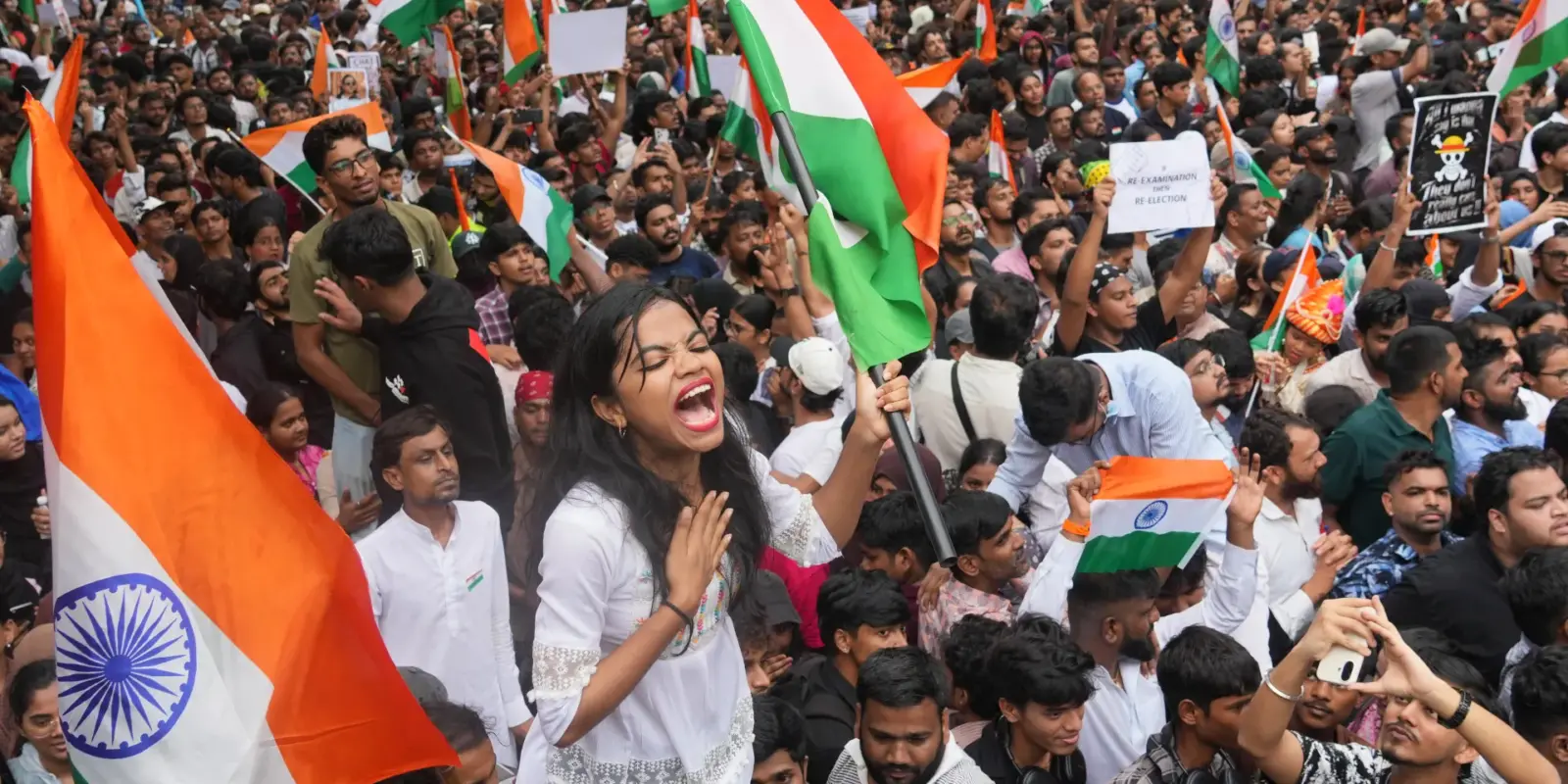
The political landscape in India shifted unexpectedly on a humid August night in Patna when the Bharatiya Janata Party lost a stronghold it had held for thirty years. In the Bankipur constituency of Bihar, the victory of Prashant Kishor’s nascent Jan Suraaj Party served as a jarring wake up call for Prime Minister Narendra Modi’s administration. This loss followed closely on the heels of a wave of student unrest that forced the resignation of Education Minister Dharmendra Pradhan, sparked by leaked exam papers and fueled by a satirical digital movement known as the Cockroach Janta Party. Born on Instagram after Chief Justice Surya Kant compared unemployed youths to parasites and cockroaches, the group turned a derogatory label into a badge of defiance, challenging the BJP’s grip on the younger generation.
In an attempt to stem the tide, the BJP has pivoted toward a clumsy charm offensive aimed at Generation Z. Prime Minister Modi has leaned into selfie style videos and encouraged his ministers to abandon traditional press briefings in favor of Instagram reels. From deploying administrative officers into schools for career counseling in Uttar Pradesh to releasing cringeworthy videos where officials attempt to use internet slang to promote government records, the effort has often backfired. Many young users have mocked these attempts as transparent propaganda, suggesting that while the party still controls mainstream media, it has lost its ability to create organic emotional connections on decentralized platforms like Instagram.
Analysts suggest that this crisis represents something deeper than a mere communication failure; it marks a breakdown in the BJP’s traditional playbook for handling dissent. In previous years, protesters were often branded as anti national or foreign funded agents, but the cockroach movement evaded these labels through self mocking humor and a broad, caste blind coalition that included members of the party’s own upper caste Hindu base. By refusing to be pigeonholed into a single religious or communal identity, the movement stripped away the typical tools of polarization used by the state to marginalize opposition.
Ultimately, this era of unrest may have permanently altered the public image of Narendra Modi himself. For years, he was presented as an ageless leader with an innate command over India’s youth, but critics now argue that he has been recast in the public imagination as a disconnected boomer struggling to understand a changing world. While recent by election results remain mixed across different states, showing both resilience and vulnerability, the psychological blow persists. The emergence of a youthful rebellion that laughs at authority suggests that if the BJP wants to maintain its dominance, it may need more than better hashtags; it may need actual policy shifts for an anxious generation.